
Chimney sweeping
The annual sweep that keeps a season of creosote from turning into a fire — done without leaving a trace of soot in your living room.
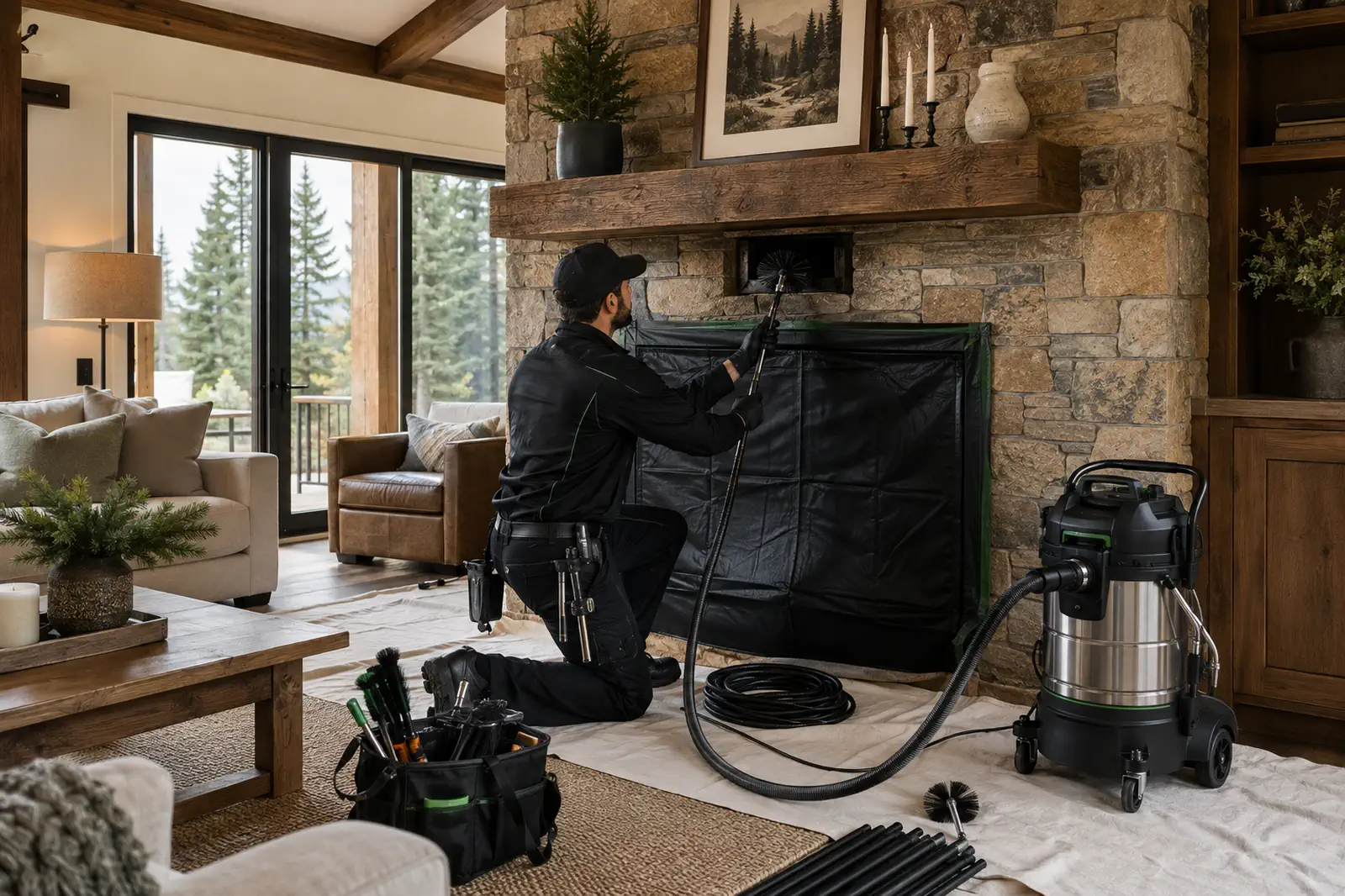
What a sweep actually includes
- Drop cloths down and the fireplace opening sealed before anything starts
- Flue swept top to bottom with rod and brush sized to your liner
- Firebox, smoke shelf and smoke chamber cleaned out
- Damper cleared and checked that it still opens and closes
- Ash and debris vacuumed, not swept into the room
- Cap and crown checked from the top, not guessed at from the hearth
- Draft and airflow checked, because a clean flue that will not draw is still a problem
- A Level 1 inspection in the same visit, and the findings in writing
A straightforward sweep runs about an hour to an hour and a half. Heavy buildup, a second flue, or a roof that is steep or slick takes longer — and we tell you that before we start, not after.
The three degrees of creosote
Creosote is not one thing, and the difference decides both the method and the price. Anyone quoting a number before seeing which degree you have is guessing.
What we will not do
This industry has a reputation, and it was earned. So, plainly: we do not quote repairs before inspecting. We do not use photos of someone else’s chimney to explain yours. We do not offer a discount that expires when we leave the driveway. And if your chimney does not need sweeping yet, we will say so and put that in writing too.
Questions about sweeping
How often does a wood-burning fireplace need sweeping?
Does a gas fireplace need this?
Will there be soot in my house?
Can you sweep a chimney that has not been used in years?
If you would rather not have to remember
This is the visit that most people mean to book and then do not, for four years running. A maintenance plan puts it on a schedule at a locked price, and stacks the written findings into something you can actually compare year on year.
A safer chimney starts with an honest look at it.
Booking takes a minute. Peak season here runs September through November.